

How Often Should You Schedule Carpet Cleaning? A Complete Guide
Carpet cleaning is one of those home maintenance tasks that’s easy to put off until a stain, an odor, or a visiting relative forces the issue. But waiting too long between visits doesn’t just make your floors look tired, it also affects the air you breathe every day. Dust, pet dander, dirt, and bacteria settle deep into carpet fibers where a vacuum alone can’t reach them. So how often should you schedule carpet cleaning? The honest answer depends on your household, but there are clear, research-backed guidelines that take the guesswork out of it.
This guide walks through exactly how often professional carpet cleaning should happen for different types of homes, the warning signs that mean you shouldn’t wait any longer, and the maintenance habits that stretch the time between visits.
Quick Answer: Most homes should schedule professional carpet cleaning every 6 to 12 months. Households with pets, young children, allergy sufferers, or heavy foot traffic should aim for every 3 to 6 months. Regular vacuuming two to three times a week between visits helps protect your investment and keeps indoor air quality healthy.
Why Cleaning Frequency Matters
Carpet acts like a filter for your home. Every day it traps dust, pollen, pet hair, dead skin cells, and airborne pollutants that would otherwise stay suspended in the air you breathe. The Institute of Inspection, Cleaning and Restoration Certification (IICRC), the industry body that sets standards for professional cleaners, recommends hot water extraction at least once a year for the average household, with more frequent service for higher-traffic or higher-risk homes.
Skipping regular maintenance doesn’t just mean a dingier-looking floor. Ground-in dirt acts like sandpaper on carpet fibers every time someone walks across it, wearing down the pile and shortening the carpet’s usable life. Many carpet manufacturers actually require documented professional service at set intervals to keep the product warranty valid, so a consistent schedule can be the difference between a warranty claim being honored or denied. This is one reason working with certified professional cleaners, rather than relying on DIY rental machines alone, tends to pay off over the life of a carpet.
How Often Should You Schedule Carpet Cleaning? General Guidelines
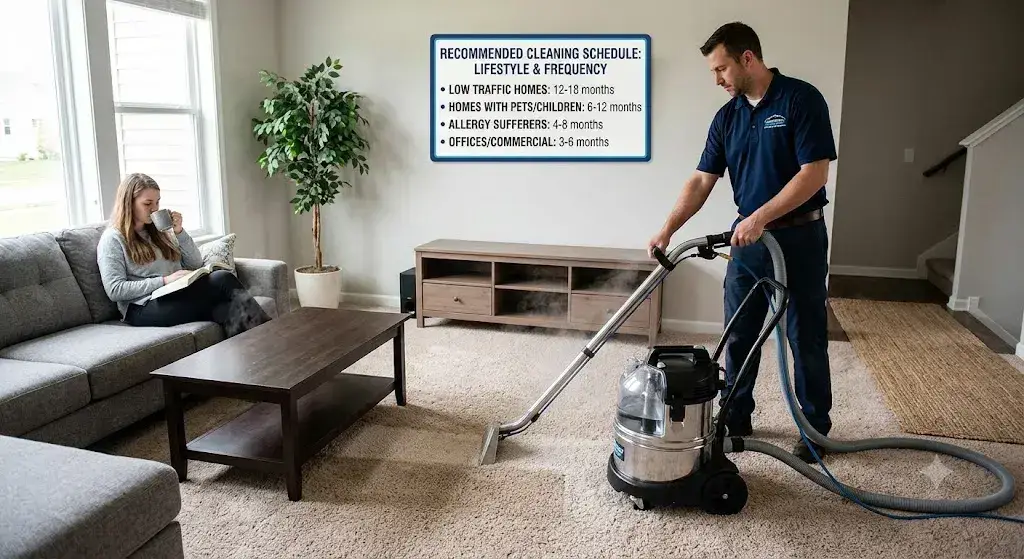
There’s no single number that fits every home, but industry guidelines break down cleanly by lifestyle and household type. Use the list below as a starting point, then adjust based on the factors covered next.
- Low-traffic home, no pets or kids: every 12 to 18 months
- Average household, moderate traffic: every 6 to 12 months
- Home with one or two pets: every 4 to 6 months
- Home with young children: every 4 to 6 months
- Household with allergy or asthma sufferers: every 3 to 4 months
- High-traffic homes or rental properties between tenants: every 3 to 6 months
- Light-colored or high-pile carpet: every 6 months, regardless of traffic
If you’re trying to decide when should you schedule professional carpet cleaning for your specific situation, think of these ranges as a floor, not a ceiling. It’s rarely a problem to clean more often than the guideline suggests. Waiting well beyond it is where carpet, and indoor air quality, start to suffer.
Factors That Affect How Often You Should Clean Your Carpet
Foot Traffic
The more feet, paws, and shoes crossing your floor daily, the faster dirt accumulates below the surface. Entryways, hallways, and living rooms typically need attention more often than a rarely used guest bedroom. If you work from home, run a home daycare, or simply have a large family, your cleaning frequency should lean toward the shorter end of the recommended range.
Pets
Carpet cleaning for homes with pets deserves its own category. Pet dander, hair, and accidents introduce bacteria and odor-causing compounds that basic vacuuming can’t fully remove. Even well-behaved pets track in dirt and outdoor allergens on their paws multiple times a day. Homes with dogs or cats generally do best with a professional visit every four to six months, and sooner if there’s been an accident that’s soaked into the padding underneath.
Allergies and Respiratory Health
Carpet cleaning for allergy sufferers is less about appearance and more about health. Carpet fibers trap dust mites, pollen, mold spores, and pet dander, all common triggers for asthma and seasonal allergies. For households managing these conditions, a three to four month cycle, paired with a HEPA-filter vacuum in between, makes a measurable difference in day-to-day comfort and indoor air quality.
Carpet Color and Fiber Type
Light-colored carpets show soil faster and often need more frequent attention purely for appearance’s sake. Denser, looped, or high-pile carpets also tend to trap more debris than flatter weaves, which means dirt builds up out of sight even when the surface still looks fine.
Household Size and High-Traffic Areas
A larger household naturally generates more daily wear. Carpet cleaning for high-traffic areas, like stairs, hallways, and family rooms, may need to happen more frequently than in a formal living room that sees light use. It’s common for homeowners to schedule spot treatment for these zones between full-home visits.
Manufacturer and Warranty Requirements
Some carpet warranties specify a minimum professional service interval, often every 12 to 18 months, using an approved method such as hot water extraction. Skipping this can void coverage even if the carpet is otherwise in good condition, so it’s worth checking the paperwork that came with your flooring before assuming a warranty claim will be honored.
Signs Your Carpet Needs Attention Now
Even with a set schedule, certain signs mean it’s time to book a visit sooner rather than later:
- Visible stains that don’t lift with spot treatment
- A musty or sour smell, especially near baseboards
- Carpet that looks dull or flattened along high-traffic paths
- Increased sneezing, coughing, or allergy symptoms indoors
- Dust that resettles quickly after vacuuming
- Discoloration near vents or sunny windows
- A noticeable change in how the flooring feels underfoot
Any one of these on its own might not be urgent, but two or more together usually means it’s past time for professional attention.
Benefits of Regular Carpet Cleaning
The benefits of a consistent care routine go well beyond a fresher-looking floor.
Better Indoor Air Quality
Removing trapped dust, allergens, and pollutants through deep cleaning measurably improves the air circulating through your home, which matters most for children, older adults, and anyone with respiratory sensitivities.
Longer Carpet Lifespan
Routine professional service removes the abrasive grit that wears down fibers, protecting your flooring investment and delaying the cost of full replacement. A carpet that’s cleaned on schedule can often last several years longer than one that’s neglected.
Odor and Stain Control
Professional-grade equipment and solutions reach pet stains, spills, and everyday grime that household products and surface treatment can’t fully lift, addressing both the stain and the odor at the source rather than just masking it.
A Healthier Home Overall
Reduced dust mites and allergens contribute to a healthier living environment for the whole household, not just those with diagnosed allergies or asthma.
Preserved Appearance and Resale Value
Well-maintained flooring holds its color and texture longer, which matters if you’re planning to sell or rent your home in the future. Buyers and renters both notice carpet condition during a walkthrough.
How to Keep Carpets Clean Between Professional Visits
A solid maintenance routine stretches the time between professional visits and keeps your home looking its best year-round. A few care tips worth building into your routine:
- Vacuum high-traffic areas two to three times a week, and the rest of the home weekly
- Use walk-off mats at every entry point to trap outdoor dirt before it reaches the floor
- Treat spills immediately by blotting, never rubbing, to prevent them from setting into the fibers
- Rotate furniture occasionally to even out wear patterns
- Take shoes off at the door, especially during wet seasons
- Groom pets regularly to reduce shed hair and outdoor debris
- Schedule a light spot-treatment session monthly for entryways and high-use zones
These habits won’t replace the deep clean a professional visit provides, but they meaningfully extend the life and appearance of your carpet between services and can even let you stretch toward the longer end of your recommended schedule.
Steam Cleaning vs. Deep Cleaning: What’s the Difference?
Homeowners often ask how often carpet should be steam cleaned versus how often to deep clean, assuming they’re two separate services. In most cases, steam cleaning, technically called hot water extraction, is the deep method professionals use. Hot water and solution are injected into the fibers under pressure, then extracted along with the loosened dirt, allergens, and residue. This differs from surface-level shampooing, which treats the top of the fiber but can leave residue behind if not fully extracted afterward.
For most households, hot water extraction every 6 to 12 months provides the deepest results for both appearance and indoor air quality. It’s also the method most manufacturer warranties require to stay valid, which is worth confirming before hiring anyone who advertises a cheaper shampoo-only package.
Best Time to Schedule Carpet Cleaning
There isn’t a single “correct” month, but a few timing strategies help:
- Book before allergy season ramps up in spring, when pollen tracks indoors more easily
- Schedule after winter, once salt, slush, and mud have had a chance to accumulate
- Clean before hosting the holidays, when foot traffic and spills both increase
- For rental properties, schedule between tenants as part of standard turnover
Choosing a season with lower humidity also helps flooring dry faster afterward, typically within 6 to 12 hours with proper airflow and ventilation.
DIY Carpet Cleaning vs. Professional Service
Rental carpet cleaning machines can handle light surface refreshing between professional visits, but they rarely match the suction power or water temperature of commercial equipment. Most consumer-grade machines don’t fully extract the water and cleaning solution they inject, which can leave behind moisture and residue deep in the padding. Over time, that residue actually attracts more dirt, which is why a carpet that’s frequently shampooed with a rental unit can look dingy again within weeks.
Professional technicians use truck-mounted or portable hot water extraction systems that reach far higher temperatures and suction strength, pulling out embedded soil, allergens, and moisture far more completely. For routine upkeep between scheduled services, light DIY spot cleaning is fine. For the deep clean that actually resets your carpet’s condition and supports its warranty, a trained professional is the better investment.
What Carpet Cleaning Costs and What Affects the Price
Cost varies by region, home size, and the level of soiling, but most residential jobs are priced per room or per square foot. Homes with pet stains, heavy soiling, or add-on treatments like deodorizing and stain protection typically cost more than a standard maintenance visit. Getting a clear, itemized quote upfront, rather than a vague estimate, helps avoid surprise charges once the technician arrives. Many providers also offer bundle pricing for whole-home service, which can bring the per-room cost down compared to booking a single room at a time.
It’s also worth asking whether a quote includes furniture moving, pre-treatment for stains, and post-cleaning grooming of the carpet pile, since these are sometimes billed separately even when they sound like they should be standard. A slightly higher quote that includes everything up front is often better value than the lowest advertised price with several add-ons tacked on later.
How to Choose the Best Carpet Cleaning Service
Not all providers offer the same level of care, and choosing the right company makes a real difference in results. A few things worth checking before booking:
- IICRC certification, which confirms technicians are trained to recognized industry standards
- Clear pricing with no vague add-on fees for stain treatment or deodorizing
- Use of hot water extraction rather than only surface shampooing
- Positive, verifiable reviews specific to residential service
- Eco-friendly, pet-safe solutions if you have children, pets, or sensitivities in the home
- A satisfaction guarantee or re-clean policy if results fall short
A reputable residential provider should be able to explain their process, the equipment they use, and realistic drying times before they ever start the job. Asking a few of these questions upfront is a simple way to compare quotes that otherwise look similar on paper.
Frequently Asked Questions
How often should carpets be professionally cleaned?
Most homes should schedule a professional visit every 6 to 12 months. Homes with pets, kids, or allergy concerns typically need service every 3 to 6 months to keep fibers, and indoor air, genuinely clean.
Is annual carpet cleaning enough?
For a low-traffic household with no pets or allergy concerns, once a year is often enough to maintain both appearance and carpet lifespan. Busier or higher-risk homes usually need a shorter interval.
Can you clean carpets too often?
It’s uncommon to over-clean using proper professional methods. That said, excessive shampooing with too much moisture or residue-heavy products can occasionally lead to faster re-soiling, which is why hot water extraction by trained technicians is the preferred method.
How often should pet owners clean their carpets?
Homes with dogs or cats generally benefit from a professional visit every 4 to 6 months, with faster action needed after any accident that reaches the padding underneath.
What is the best season for carpet cleaning?
Spring and early fall tend to work well, since lower humidity supports faster drying and scheduling ahead of allergy season or holiday hosting keeps floors in top condition when it matters most.
Does carpet cleaning improve indoor air quality?
Yes. Deep cleaning removes trapped dust mites, pollen, pet dander, and other allergens that accumulate below the surface, which directly supports better indoor air quality for the whole household.
How often should commercial carpets be cleaned?
Commercial spaces typically see far more foot traffic than residential homes and generally need professional service every 3 to 6 months, with high-traffic entryways sometimes requiring monthly attention.
How can I keep my carpet clean between professional services?
Regular vacuuming, walk-off mats at entrances, prompt spill treatment, and taking shoes off indoors all help maintain clean floors and extend the time between professional visits.
Carpet Cleaning for Renters and Move-Outs
If you’re renting, your lease may already require professional carpet cleaning before move-out, and many landlords ask for a receipt as proof of service. Even where it isn’t required, a fresh, professionally cleaned carpet at move-out helps protect your damage deposit and leaves the unit in good condition for the next tenant. Scheduling this as early as possible after giving notice also gives carpet enough time to dry fully before the final walkthrough.
Final Thoughts
There’s no universal answer to how often should you schedule carpet cleaning, but there is a reliable framework: most households do well with a professional visit every 6 to 12 months, while homes with pets, kids, allergies, or heavy traffic benefit from a 3 to 6 month cycle. Pairing that schedule with consistent at-home maintenance, regular vacuuming, walk-off mats, and prompt spill care, keeps carpet looking better, lasting longer, and contributing to a healthier home in between visits.
If it’s been more than six months since your last professional service, that’s usually a good sign it’s time to book one.
This guide was compiled using current IICRC industry standards and manufacturer care guidelines for residential carpet, and reflects practices commonly recommended by professional cleaning technicians when advising homeowners on service frequency.