

Deep Cleaning Checklist: What's Actually Included in a Professional Deep Clean
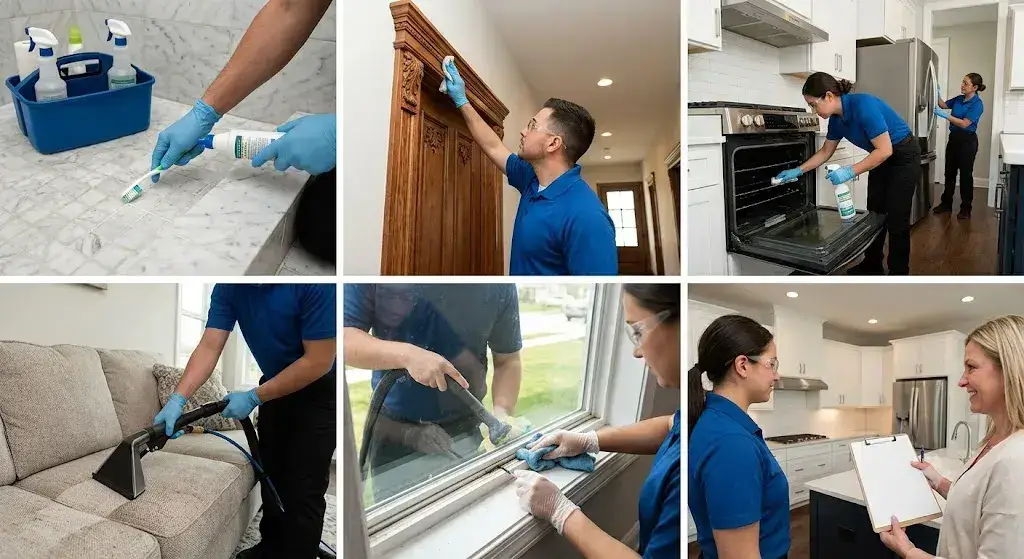
“Deep cleaning” gets used loosely — some companies call anything beyond a quick tidy-up a deep clean, while others reserve the term for a genuinely exhaustive, top-to-bottom service. That inconsistency makes it hard to know what you’re actually paying for, or whether a DIY weekend of scrubbing covers the same ground a professional crew would.
Quick answer: A professional deep clean covers everything a standard clean does, plus the areas that get skipped in routine maintenance — inside appliances, baseboards, window tracks, light fixtures, cabinet interiors, and detailed grout and grime removal. It’s typically recommended every 3–6 months, before a big event, or as the first clean when starting recurring service.
This guide breaks down exactly what’s included in a full deep cleaning checklist, room by room, plus what changes if you’re looking at an office deep clean or a move-in deep clean specifically. If you’re trying to decide whether you need a deep clean or a standard clean in the first place, our Deep Clean vs. Standard Clean comparison breaks down that distinction directly. And if pricing is what you’re after, our North Vancouver and Metro Vancouver cost guides cover deep cleaning rates by home size in full detail.
What Makes a Clean “Deep” Instead of Standard?
A standard clean maintains a home that’s already reasonably tidy — surface dusting, vacuuming, mopping, and a wipe-down of kitchen and bathroom surfaces. A deep clean goes into the areas a routine visit doesn’t touch: behind and inside appliances, built-up grime in grout lines, baseboards, window tracks, light fixtures, and cabinet interiors. It takes considerably longer — often two to three times the labour hours of a standard clean on the same space — because crews are working through accumulated buildup rather than routine upkeep.
The Complete Deep Cleaning Checklist, Room by Room
Kitchen
- Inside oven, stovetop burners, and range hood filter
- Inside refrigerator and freezer, including door seals
- Inside and behind the microwave
- Cabinet interiors and exteriors, including hardware
- Backsplash and grout lines scrubbed
- Underneath and behind appliances where accessible
- Light fixtures and ceiling fans
- Baseboards and door frames
Bathroom
- Grout lines scrubbed and mildew removed
- Inside and behind the toilet, including the base
- Cabinet interiors and exteriors
- Shower doors and tracks descaled
- Exhaust fan vent cleaned
- Light fixtures and mirrors detailed
- Baseboards and window sills
Bedrooms & Living Areas
- Baseboards and window sills wiped down
- Window tracks and frames cleaned
- Light fixtures and ceiling fans dusted
- Closet interiors, shelving, and rods wiped
- Underneath furniture where accessible
- Door frames and light switch plates detailed
- Carpets and upholstery vacuumed thoroughly, including edges
Whole-Home Extras Often Included
- Interior window cleaning
- Vent and register dusting
- Wall spot-cleaning for scuffs and marks
- Entryway and mudroom detailing
For a size-by-size look at how long this typically takes and what it costs, see our house cleaning cost guides — this checklist applies whether you’re booking a 1-bedroom condo or a 4-bedroom home; what changes with size is time and price, not the task list itself.
Office Deep Cleaning Checklist: What’s Different
An office deep clean covers the same underlying philosophy — the areas routine cleaning skips — but the specific tasks shift toward shared equipment and higher-traffic zones:
- Disinfecting shared surfaces: desks, phones, keyboards, and shared equipment
- Deep-cleaning carpets and upholstered furniture in common areas
- Interior window and glass partition cleaning
- Kitchen/break room appliances, inside and out
- Washroom deep sanitation, including grout and fixture descaling
- Vent and air register dusting
- Baseboards and high-touch door frames throughout
Offices generally need this level of cleaning less frequently than homes — often quarterly rather than every few months — since routine daily or weekly service handles the high-touch surfaces in between. For the full breakdown of regular office cleaning tasks and how they differ from a deep clean specifically, see our office cleaning checklist guide. If you’re setting up a recurring commercial cleaning contract that includes periodic deep cleans, our commercial cleaning checklist for contracts covers how that’s typically structured.
Move-In Deep Cleaning Checklist: What to Prioritize
A move-in deep clean has a specific goal that’s different from a routine deep clean: making sure a space is genuinely sanitized before you unpack, not just visually clean. Priorities shift slightly:
- Cabinet and closet interiors wiped down before anything is placed inside them
- Inside the refrigerator and freezer, cleaned before groceries go in
- All light fixtures and ceiling fans, which often collect dust during vacancy
- Bathroom fixtures fully disinfected regardless of how clean they appear
- Window sills and tracks throughout
- Air filters replaced or cleaned if the unit has forced-air heating
This is a genuinely different checklist context from a move-out clean, which focuses on removing traces of a previous tenancy rather than sanitizing before move-in. Our complete move-in/move-out cleaning checklist covers both sides in full detail, including the safety and function checks (smoke detectors, water flow, locks) worth doing before any deep clean even starts.
How Often Do You Actually Need a Deep Clean?
- Every 3–6 months for most households, as routine maintenance
- Before hosting a major event — holidays, gatherings, or visitors staying long-term
- As your first clean when starting a recurring cleaning plan, especially if it’s been several months since a professional last cleaned the space
- After illness in the household, when a more thorough disinfection is warranted
- Seasonally, particularly heading into spring after a wet winter, when entryways and floors accumulate the most buildup
If you’re unsure whether your specific situation calls for a deep clean versus sticking with standard maintenance, our how often should you book professional house cleaning guide walks through the decision in more detail.
DIY Deep Cleaning vs. Hiring a Professional
A DIY deep clean is realistic for a smaller space with a free weekend and the right supplies — degreaser, grout cleaner, a good vacuum with attachments, and microfiber cloths. Where it typically falls short is grout restoration, inside large appliances, and reaching high or awkward areas like vent covers and ceiling fans without the right equipment. Professional crews also work in teams, which means a job that takes one person a full weekend often takes a trained crew of two or three a matter of hours.
Finding Deep Cleaning Services Near You
If you’re comparing deep cleaning services in your area, the same vetting principles apply as any other cleaning service — insurance, background-checked staff, and a clear, itemized scope of what’s included rather than a vague flat quote. Our guide to vetting any cleaning company covers the red flags to watch for, and our cleaning services guide for North Vancouver breaks down every type of cleaning service available in the area, including deep cleaning, if you’re not sure exactly which service fits your situation.
Frequently Asked Questions
What’s included in a deep cleaning service?
A deep clean includes everything a standard clean covers, plus inside appliances, baseboards, window tracks, light fixtures, cabinet interiors, and detailed grout and grime removal — the areas routine maintenance cleaning typically skips.
Is a deep clean the same for a house, office, and move-in?
The underlying idea is the same — addressing what routine cleaning skips — but priorities shift. A house deep clean focuses on accumulated household buildup, an office deep clean focuses on shared surfaces and common areas, and a move-in deep clean prioritizes sanitizing before you unpack rather than removing prior buildup.
How long does a deep clean take compared to a standard clean?
A deep clean typically takes two to three times longer than a standard clean on the same space, since crews are working through buildup that hasn’t been addressed in routine visits.
Do I need a deep clean before starting recurring cleaning service?
Most cleaning companies recommend it, especially if it’s been more than a few months since the space was last professionally cleaned. Starting recurring service with a deep clean means every visit afterward maintains a genuinely clean baseline rather than slowly catching up.
How much does a deep clean cost?
Pricing depends on home size and condition. See our North Vancouver or Metro Vancouver cost guides for a full breakdown by home size.
The Bottom Line
“Deep cleaning” isn’t a marketing term when it’s done properly — it’s a specific, larger scope of work that covers exactly the areas a routine visit is designed to skip. Whether you’re booking one for a home, an office, or a move-in, knowing what should actually be on the checklist is the best way to make sure you’re getting — and paying for — a genuinely thorough clean, not just a longer version of a standard one.
Yara Cleaning provides full deep cleaning services across North Vancouver, Vancouver, Burnaby, and the surrounding Lower Mainland, for homes, offices, and move-in/move-out transitions. Contact us for a detailed, itemized quote based on your specific space.